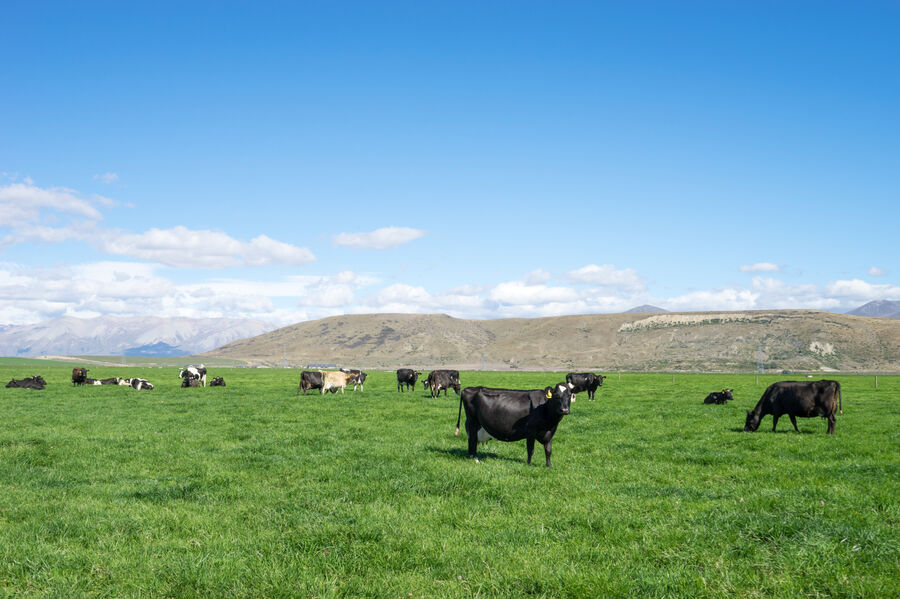
Managing higher-than-normal covers now to protect pasture quality and stock performance when it counts
Aside from a cold blast earlier this month, winter has been kind so far, and many farms are carrying higher pasture covers than usual for this time of year. That’s a reasonable position to be in – but it’s worth thinking now about how those covers are managed through the rest of winter and into spring. The main risk isn’t a winter one; it’s the pasture quality challenge that can emerge at the end of the first spring round if high covers are left to accumulate unchecked.
Protect your residuals
Ryegrass plants are under stress in winter. Growth is slow, root reserves are being drawn on, and recovery from defoliation is limited. On a dairy platform, grazing below 1,500 kgDM/ha strips the leaf area plants need to rebuild. Target a consistent post-grazing residual of 1,500–1,600 kgDM/ha and hold that line, even when there’s feed left that stock could keep working through.
Don’t underestimate pugging
A pugged paddock isn’t just an eyesore. Significant soil compaction reduces drainage and aeration, creating exactly the conditions that low-value species – poa, browntop, and annual grasses – need to establish. Once in, they’re costly to remove and quietly erode the productive capacity of your pastures for years. If a paddock is wet, push it back in the rotation. A few extra days of rest is a far better outcome than a paddock that takes several seasons to recover.
Winter feed gives you options
The farms most at risk of pugging and overgrazing damage through winter are those running tight on feed. When there’s no buffer, compromises get made – wet paddocks get grazed, residuals get pushed lower than they should. Having a fodder crop, conserved silage, or supplementary feed available gives you the flexibility to make the right call without putting condition at risk. That flexibility has a long-term payoff well beyond the immediate season.
The quality risk in early spring
On a dairy platform, covers sitting above 3,500 kgDM/ha heading into spring carry a significant accumulation of dead and declining material. As those paddocks come around in the first spring round, pasture quality can drop sharply at exactly the time stock need to be performing at their peak. The same principle holds across sheep and beef systems – high, rank covers going into spring will always carry a quality penalty, regardless of how that feed is measured or managed.
Rank, stemmy pastures at this point in the season can see crude protein fall well below what’s required to support peak lactation, with metabolisable energy declining alongside it. The downstream effects on milk production, body condition recovery, and reproductive performance can be significant and are often underestimated.
22–25% CP Required for peak lactation in early spring |
>3,500 kgDM/ha Dairy platform cover threshold where quality starts to decline noticeably |
First spring round When quality issues from high winter covers typically emerge – timing varies by system |
Monitoring quality and knowing when to act
The best way to stay ahead of a spring quality issue is to monitor it directly rather than wait for production signals to tell you something has gone wrong. Pasture testing towards the end of the first round will give you an accurate picture of what cows are actually eating – crude protein, ME, and fibre levels – and whether the feed on offer is meeting requirements.
On a dairy platform, milk urea levels and protein-to-fat ratios are a useful real-time indicator of dietary protein status. Low milk urea can signal that pasture protein is falling short, while a declining protein-to-fat ratio often reflects cows mobilising body condition rather than producing from diet. Tracking these metrics through the first round, alongside pasture testing, gives you the information you need to make a timely call on supplementation.
Where pasture quality is clearly going to fall short of requirements towards the end of the first round, bridging the gap with high-protein supplements is worth considering. Having that option lined up before the deficit arrives – rather than reacting once production has already dropped – is the difference between managing the issue and chasing it.
Use the right stock class at the right time
Where covers are running high coming out of winter, stock allocation is your most effective management tool. Springer cows in the lead-up to calving can be used to graze heavier paddocks and pull average platform covers down before the milking herd begins its spring rotation – a practical use of animals that need to be managed and moving anyway.
Once the milking herd is underway, dry cows and young stock – R1s and R2s – have a clear role cleaning up behind the main mob. Milking cows graze selectively, taking the best leaf and leaving stemmy, lower-quality material. Running dry cows or young stock through after them removes that reject feed, resets the paddock, and sets up a better-quality regrowth for the next round. These stock classes handle lower-quality feed well and won’t carry the production penalty that milking cows would.
It’s not just a dairy issue
The same principles apply across sheep and beef systems. Ewes heading into lambing and cows in late pregnancy have critical nutritional requirements at exactly the time high, rank covers are at their lowest quality. Pasture protein and energy deficits in the weeks around lambing and calving directly impact lamb and calf survival, ewe and cow body condition, and subsequent reproductive performance. Finishing stock are equally sensitive – rank, stemmy pastures in spring will limit growth rates and extend finishing time. Manage covers through winter, use appropriate stock classes to bring them into line early, and protect your best pastures from unnecessary damage.
Sulphur-based fertiliser as part of your early spring programme is worth considering across all systems. Sulphur plays a direct role in pasture protein synthesis, and a well-timed sulphate sulphur application can meaningfully lift feed quality through the first round.
Now is the time to plan for next winter
The lessons from a season like this one are most valuable when they’re acted on early – not revisited at the start of next May. If higher covers have created challenges this spring, or if your winter feed buffer was tighter than you’d have liked, now is the time to think about crop planning, pasture renewal, and feed budgeting for next year. Decisions around which paddocks to crop, what to sow, and how to structure your winter rotation are ideally made in late summer and autumn – well before the pressure of the season arrives. Getting ahead of it while this winter is fresh in your mind puts you in a much stronger position come next June.
If you’d like to work through a plan – whether that’s managing covers into this spring, thinking about your spring fertiliser programme, or starting to map out next winter’s feed strategy – talk to your Catalyst agronomist. Rotation planning, stock allocation, spring fertiliser timing, and winter crop planning are all areas where getting the right advice early pays dividends across the season.
Don’t wait until September to start the conversation.