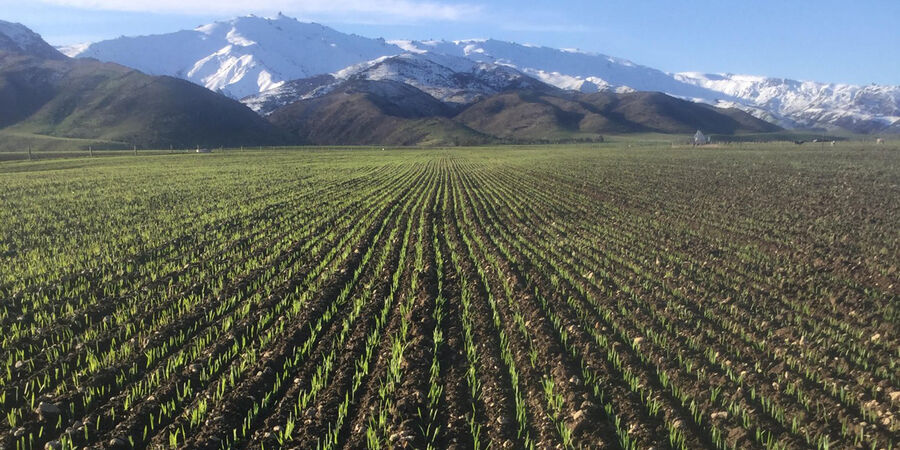
Global events have reminded us once again just how quickly fertiliser markets can change.
With ongoing uncertainty following conflict in the Middle East and continued volatility in global energy markets, nitrogen prices have remained under pressure. For New Zealand farmers, that means every kilogram of nitrogen on your farm is becoming increasingly valuable.
Which raises an important question.
If nitrogen is one of your biggest input costs, why would you leave it sitting in a bare paddock?
After winter grazing, there is often a significant amount of residual nitrogen left in the soil. Without an actively growing crop to capture it, much of that valuable nutrient is at risk of being lost through leaching before your next crop or pasture can use it.
That is fertiliser you have already paid for.
The good news is that it's entirely preventable.
Capture it before you lose it
The period immediately following winter grazing presents one of the biggest opportunities of the farming year.
Establishing a catch crop or new pasture as soon as practical helps recover residual nitrogen and convert it into something far more valuable - feed.
Instead of losing nutrients below the root zone, you are growing dry matter, improving soil cover and building flexibility into the rest of your rotation.
The sooner that crop is growing, the more nitrogen it captures.
The earlier you sow, the greater the return
Timing is the biggest driver of success.
Research consistently shows that crops established soon after grazing capture significantly more nitrogen and produce substantially higher dry matter yields than those sown weeks later.
Every day a paddock sits bare is another day valuable nitrogen can be lost.
As soils warm and paddocks become trafficable, getting seed into the ground should become a priority.
Choose the right crop for your system
There is not a one-size-fits-all solution.
Depending on your rotation and feed requirements, the right option may be:
Catch Crops
Fast-establishing cereals such as White Oats, Black Oats, Barley, Triticale and Ryecorn quickly recover nitrogen while producing valuable spring feed.
Short-Term Pasture Options
If your plan is to return the paddock to pasture, short-term grasses such as Italian and annual ryegrass are an excellent way to put residual nitrogen to work.
Fast to establish and highly responsive to available nitrogen, these species convert valuable nutrients into high-quality feed quickly, providing excellent grazing through spring and beyond while helping reduce nutrient losses.
The right cultivar and sowing timing will depend on your farming system, feed demand and future rotation plans, but getting a productive grass established early is one of the most effective ways to make every kilogram of nitrogen count.
Combine Both
In many situations, undersowing cereals with Italian ryegrass delivers the best of both worlds - rapid nutrient capture today with extended grazing opportunities into the future.
Don't just buy nitrogen - use every kilogram.
With fertiliser representing one of the largest investments on many farms, the focus should not simply be on what nitrogen costs.
It should be on how much of it you actually utilise.
Every kilogram captured by a growing crop is another kilogram working for your business instead of disappearing below the root zone.
That is good for the environment and more importantly, it is good for your bottom line.
Whether you are planning a catch crop, renewing pasture or deciding which species best fits your rotation, now is the time to plan.
Our agronomists can help you select the right option, maximise establishment and ensure the nitrogen already sitting in your soil goes towards growing feed - not growing your fertiliser bill.
Nitrogen is too expensive to lose, let's put it to work.