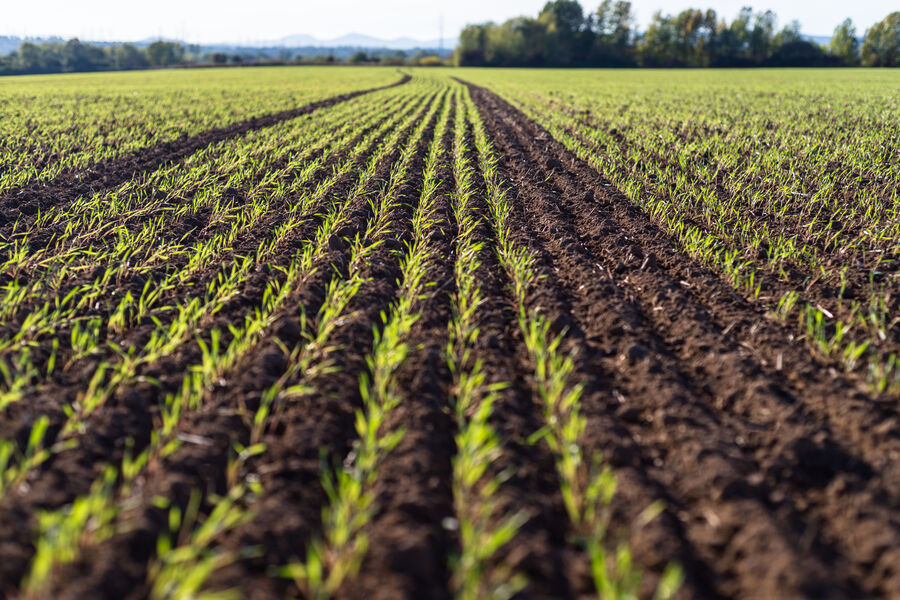
Getting autumn cereal establishment right starts before the drill even rolls.
Strong yields are built on plant numbers, clean paddocks, and understanding the conditions in front of you. A few smart calls at sowing can make a big difference later in the season.
Know your variety – varieties have different tillering abilities and slightly different sowing windows which will impact your target plants per square.
Plant numbers is the first component in determining yield. It is worth spending a few minutes to make sure you get your drilling rate right for your variety, your area, time of year, seedbed and moisture conditions.
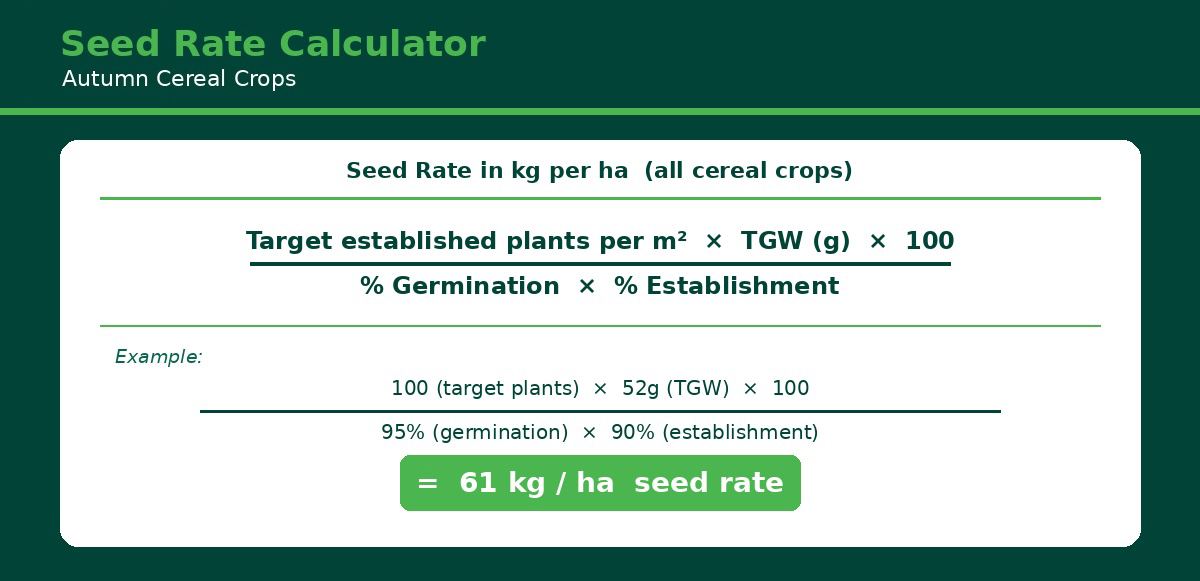
Utilise the below calculator: It is important to know the specs of your seedline (TGW and germ %). As mentioned above, know your target plant population given variety and sowing window. A critical factor here is the establishment %, which should be adjusted for time of sowing – lower % the later it gets in the Autumn. Also factor in whether direct drilling, insect/slug pressure and moisture etc. Condition of seedbed can play a big role as well – as examples: Coming out of potatoes often leaves seedbed quite loose and fluffy, where you’ll see the drill planting deeper than expected and can cause capping issues, this will reduce plant numbers. The same coming out of Maize, you often see seedling plants trapped under Maize roots and stalks leading to lower established numbers. Direct drilling will have the same effect. Adjust for these factors.
Weed control
Special focus on grass weed control - make sure you take your time utilising a fallow period if possible and terminate weeds with non-selective chemistry prior to planting. Grass weeds are more difficult to control in cereals than broadleaves and there is also a bigger risk on grass weed resistance to some chemistry. The pre emerge window of application must be utilised as best as can, some of our post emerge grass control options have widespread and known resistance. Determine what your grass weed issue is whether Ryegrass, Bromes, Vulpia etc and make a choice of pre emerge chemistry that will work best. Also, a good time to come up with a post emerge weed control strategy. Talk to your agronomist and make sure that you are utilising different mode of action chemical groups not just in your cereals, but across your system.
Plant counts
Doing plant counts when all plants have established is good practise for a couple of reasons. 1. It will give you confidence that your drilling rate calculations were right and that will make it easier for the next season. 2. If plant numbers are not optimal, you’ll need to plan to drive tillering to make up for it.
Key Points
• Know your variety – Different cereals tiller differently and have different sowing windows, which changes your target plants/m².
• Plant numbers drive yield – Getting drilling rates right is one of the first and most important yield decisions you’ll make.
• Use the calculator properly – Factor in TGW, germination %, target population, establishment %, sowing date, moisture, seedbed quality, and drilling method.
• Adjust for paddock conditions – Loose seedbeds, maize residue, direct drilling, slugs, insects, or dry conditions can all reduce establishment.
• Take weed control seriously – Especially grass weeds. Use a fallow where possible, get pre-emerge chemistry on point, and rotate modes of action across the system.
• Do plant counts early – Check establishment success, learn for next season, and if numbers are light, shift management to drive tillering.