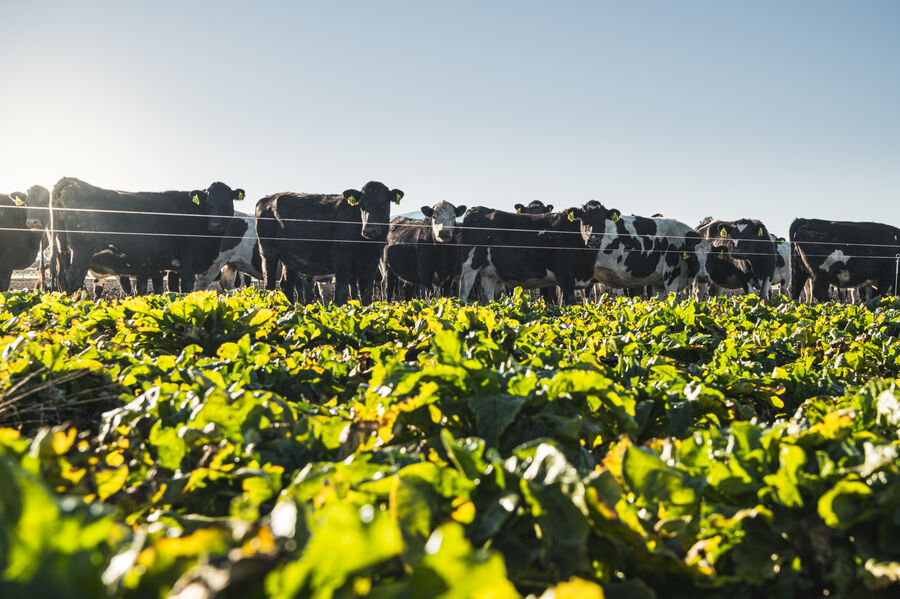
Winter grazing is just around the corner. You've invested in the crop - now the job is making sure you get the most out of it without compromising animal performance or health. That starts long before the stock go on. It starts with knowing exactly what you've got.
Crop Yielding and Feed Budgeting - Get This Right First
The amount of feed you've grown is only half the story. Knowing how much your stock will actually consume is just as important - and those two numbers are rarely the same.
Utilisation matters. Fodderbeet is well known for its high utilisation, typically hitting around 95%. Kale sits lower, closer to 80%. That difference has a real impact on how many stock days your crop will carry, and ignoring it leads to either running out of feed or carrying excess stock into late winter when options are limited.
Wet conditions make this even more critical. During wet periods, crop utilisation drops - stock trample and waste more - while animal intake often increases as they work harder to stay warm. It's a double-edged sword, and it happens every winter without fail. Building some fat into your feed budget to account for these periods isn't being conservative - it's being realistic.
Allocation drives performance. If the goal is maximum liveweight gain, a good starting point is offering 3% of liveweight per day in fresh feed, adjusting up or down based on weather conditions and daily residuals. Maintenance requirements will be lower than this, depending on stock condition and your target body condition score at the end of winter.
One important consideration for dairy farmers: it is almost impossible to put weight on a cow during the last few weeks of pregnancy. As the calf grows and takes up more room, intake drops because there simply isn't space. The best strategy is to get cows to your target BCS early in the dry-off period and maintain from there - don't rely on the winter crop period to do that work.
How to Yield Your Crop
Accurate yielding is non-negotiable. You cannot budget confidently on a number you've guessed.
Take representative samples across the paddock to establish a reliable paddock average - and remember that this is an average. There will always be variation within a paddock, so pay particular attention to getting an accurate yield on the transition face. Stock will be on restricted allocation during transition, so precision here is critical to avoid over- or under-feeding during the most vulnerable period.
Always get a dry matter test done. Yielding without a DM test is not accurate yielding. In fodderbeet crops the bulb makes up a large proportion of the total feed value, and a small change in dry matter percentage can result in a significant change in calculated yield. This is not a step to skip.
For brassica crops, yield is measured on a square metre basis and should also be dry matter tested for accuracy. Don't forget to factor in the growth that will still accumulate between now and the time of feeding. Brassicas have good cool-season activity, so crops being grazed later in winter will continue putting on yield over the coming months - a crop measured now will be heavier by the time stock go on.
If you need help with yield assessments or feed budgeting, get in touch with your Catalyst adviser. Getting accurate numbers now sets everything else up for success.
Winter Crops: The Risks Are Real, But They're Manageable
Winter crops are one of the best tools on farm - high energy, high yield, and exactly what capital stock needs when pasture growth slows. But every year, avoidable animal health events cost farmers money, time, and in some cases stock. The good news is that almost all of them come down to one simple principle: too much, too soon.
Fodderbeet - Acidosis
Fodderbeet is an exceptionally high-energy feed, which is precisely what makes it valuable - and precisely what makes it dangerous if introduced carelessly. The sugar content can exceed 20%, and the rumen simply isn't equipped to handle that load without time to adapt.
Acidosis occurs when rapidly fermentable carbohydrates overwhelm the rumen, dropping pH to levels that kill off beneficial microbes, reduce gut motility, and in severe cases cause laminitis, liver damage, and death. Stock don't always show obvious signs until they're already in trouble.
The rule is non-negotiable: transition slowly. Start at no more than 1–2 kg DM per head per day and increase by no more than 1 kg DM every second day until you reach your target allocation. Don't be tempted to rush it because the crop looks good or the weather turns. A 10-day transition isn't optional - it's the difference between a great crop and a vet bill.
Brassicas - Nitrate Poisoning
Kale, rape, and other brassicas can accumulate high levels of nitrates, particularly after stress events - cold snaps, drought followed by rain, or heavy nitrogen fertiliser applications. When stock consume high-nitrate feed rapidly, nitrate converts to nitrite in the rumen faster than the body can process it, blocking the blood's ability to carry oxygen. Animals can go down and die quickly, sometimes within hours of grazing.
Risk is highest in the first graze after a stress event, early in the morning when nitrate levels in the plant are elevated, and when hungry stock are introduced to a fresh break. Strip grazing hungry mobs into a new break without any settling-in time is a common scenario where things go wrong.
Introduce stock gradually, avoid grazing in the early morning hours, and be especially careful in the days following cold or drought-breaking rainfall.
Brassicas - SMCO (Kale Anaemia)
S-methylcysteine sulphoxide (SMCO) is a naturally occurring compound found in brassica crops - particularly kale - that damages red blood cells and causes haemolytic anaemia. Unlike nitrate poisoning, SMCO toxicity is cumulative: it builds up with prolonged exposure rather than hitting all at once.
Sheep are more susceptible than cattle. Clinical signs include pale gums, weakness, rapid breathing, and in severe cases, red or brown urine. The risk increases as the proportion of brassica in the diet rises and the length of time on crop extends.
Managing SMCO risk is largely about not over-relying on brassicas as the sole feed source for extended periods. Providing access to pasture or other roughage alongside the crop dilutes the SMCO load and gives the animal's system time to recover. Note that adding sulphate fertilisers to kale crops can increase SMCO levels - another reason crop agronomy and animal health management need to be considered together.
Brassicas - Bloat
Bloat occurs when gas builds up in the rumen faster than it can be expelled, typically triggered by the rapid fermentation of lush, leafy brassica material. Frothy bloat - where gas becomes trapped in a stable foam - is the most dangerous form and can kill quickly.
Risk is highest when stock are hungry, when crops are lush and wet, and once again, when the transition onto crop has been too fast. Grazing wet brassicas in the morning, or putting hungry mobs straight onto a fresh break, creates the ideal conditions for a bloat event.
Anti-bloat compounds can help in high-risk situations, but the most reliable prevention remains the same as every other risk on this list - don't rush the introduction.
The Common Thread
Fodderbeet acidosis, nitrate poisoning, SMCO toxicity, and bloat are four different problems with four different mechanisms - but they share the same root cause. Animals introduced too quickly to a high-energy, high-risk feed before their rumen and body can adapt.
A structured transition programme isn't extra work. It's the single most important thing you can do to get the full value from an expensive crop without losing stock in the process. If you're unsure about allocation rates, transition timing, or how to manage mixed mobs on